English
 中文简体
中文简体 Español
No.62, Beiyihuan Road, Industry Area Zhangqi Town Cixi Ningbo China.
Phone:+86-13777243189

CALL OR SEND E-MAIL
No.62, Beiyihuan Road, Industry Area Zhangqi Town Cixi Ningbo China.
Phone:+86-13777243189
Content
In modern household life, the washing machine has become an indispensable appliance. Most people focus solely on the “Wash” phase, believing that as long as enough detergent is added, the clothes will emerge clean. However, from the perspective of professional garment care and skin health, the Rinse Cycle is actually the critical stage that determines the final quality of the laundry.
Rinsing is not as simple as soaking clothes in fresh water. From a physical and chemical standpoint, it is a complex process of dilution and displacement. Its primary mission is to neutralize residual detergent chemicals and thoroughly flush out microscopic dirt suspended deep within the fabric fibers.
When we talk about rinsing, we are actually dealing with the “byproducts” left behind from the washing stage. Detergent works by using surfactants to emulsify oils and grime, keeping them suspended in the water. If the rinse is incomplete, these chemically-charged particles redeposit onto the fabric fibers.
Surfactant molecules have a hydrophilic (water-loving) end and a lipophilic (oil-loving) end. During washing, the oil-loving end grabs the grime. However, if the rinse water volume or frequency is insufficient, these molecules trap themselves in the gaps of natural fibers like cotton and linen. Once dry, these residues cause the fabric to feel stiff, turn yellow, or even develop unpleasant odors.
A professional rinse cycle involves more than static soaking. The washing machine uses the tumbling of the drum or the rotation of the pulsator to generate mechanical force, forcing fresh water through the fabric layers. This dynamic displacement can remove approximately 40% more chemical residue than static soaking alone.
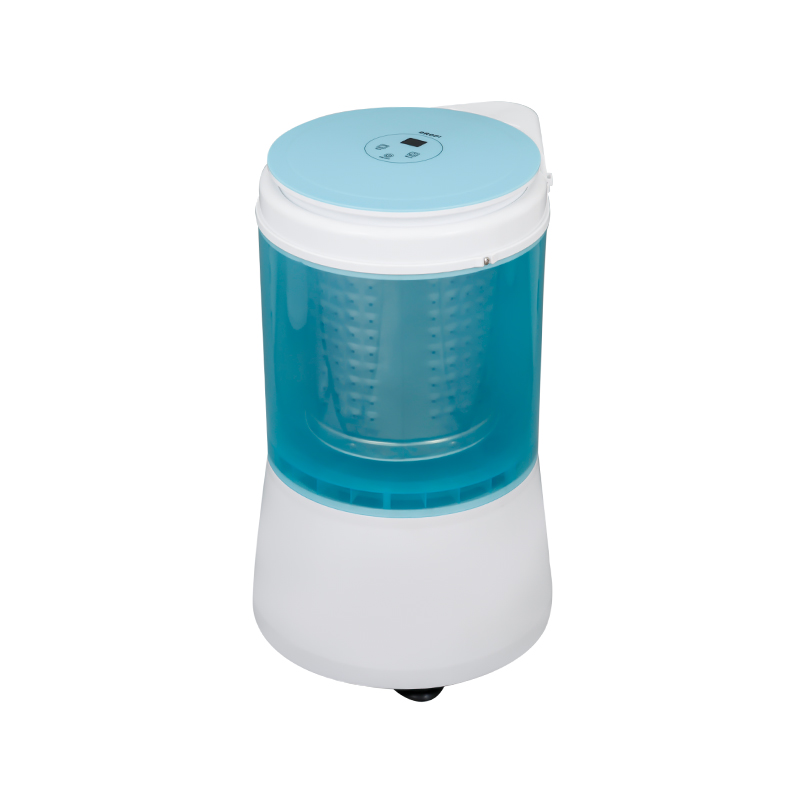
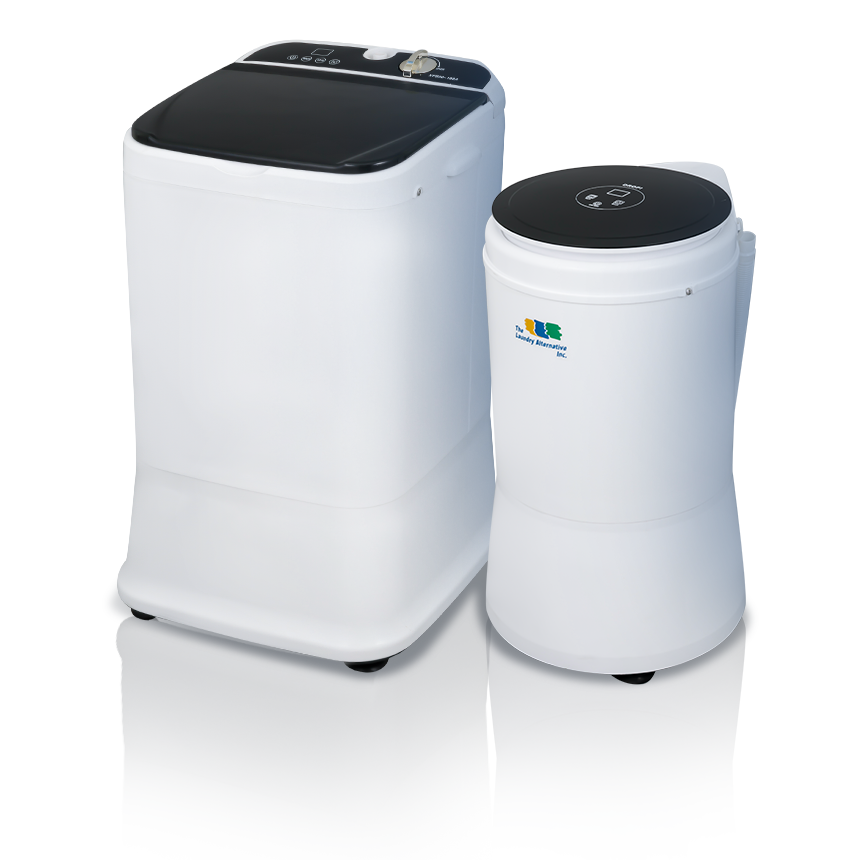
On a washing machine control panel, Rinse & Spin is usually a dedicated, independent program. Many users overlook its value. In fact, in the following scenarios, calling this function separately is more efficient and eco-friendly than running a full cycle.
To help users choose the most appropriate rinsing method based on fabric type, refer to the table below. Note: To ensure garment longevity, adjust water temperature and spin speed according to the fabric label.
| Scenario Type | Recommended Rinse Count | Water Level Selection | Core Value Proposition |
|---|---|---|---|
| Daily Cotton Wear | 2 Times | Standard | Removes sweat and basic detergent residue |
| Baby / Sensitive Skin | 3-4 Times | High | Thoroughly clears surfactants to prevent allergies |
| Active/Functional Wear | 2 Times | Standard | Protects breathable membranes from clogging |
| Cashmere/Silk (Post-Handwash) | 1 Time | Low | Uses mechanical force for final purification |
For users seeking a higher quality of life, the Extra Rinse function is a vital feature. This is not just about using a few extra liters of water; it is a long-term investment in health.
The skin is the body’s largest organ and possesses absorptive properties. If strong alkaline detergent powders or fragrances remain in the fibers, long-term friction against the skin can lead to itching, redness, or contact dermatitis. For those with eczema or sensitive skin, setting Extra Rinse as a default ensures that 100% of harmful surfactants are physically diluted.
Have you noticed white shirts yellowing or colored clothes turning dull over time? This is often not because they aren’t “clean,” but due to “soap scum” formed by calcium and magnesium ions reacting with detergent. Increasing the rinse count effectively reduces this mineral deposition, keeping whites whiter and colors more vivid.
Fabric softener should be added during the final rinse. If the initial rinsing is incomplete, residual detergents (usually anionic) react with softeners (usually cationic), causing both to fail and creating spot-like oil stains on the clothes. Only on a thoroughly rinsed base can the softener adhere evenly to the fiber surface to provide the best anti-static and softening effects.
Rinse and Spin is by no means a supporting actor in the laundry process. It is the final line of defense for garment cleanliness and a shield for your family’s skin health. By understanding the chemical logic behind it, we can utilize our machines more flexibly:
Mastering the art of the rinse means you aren’t just washing clothes—you are practicing a scientific, sophisticated, and sustainable lifestyle.
After completing the wash and rinse phases, the washing machine enters its most “dynamic” stage. For many users, spin in washing machine means simply the process of wringing out water. However, from the perspective of mechanical engineering and professional fabric care, the spin cycle is a precise balancing act between speed, centrifugal force, and fiber tension.
Understanding what does spin mean on washing machine and the physical logic behind it will not only help you save significantly on drying energy costs but is also the key to protecting expensive clothing from physical damage.
The spin cycle utilizes centrifugal force generated by high-speed rotation to “fling” moisture from the wet fabric fibers toward the outer drum. The critical parameter here is RPM (Revolutions Per Minute).
As the drum rotates, the clothes are pressed firmly against the drum wall. Due to inertia, water molecules attempt to maintain a straight-line motion, thereby passing through the small perforations in the drum wall to be drained away. The higher the rotation speed, the greater the force acting on the water molecules, resulting in lower moisture retention in the garments.
A spin program with a High RPM (1200+) can reduce the moisture content of cotton towels to below 45%. This means that if you subsequently use a dryer or hang clothes indoors, the time required will be cut by more than half.
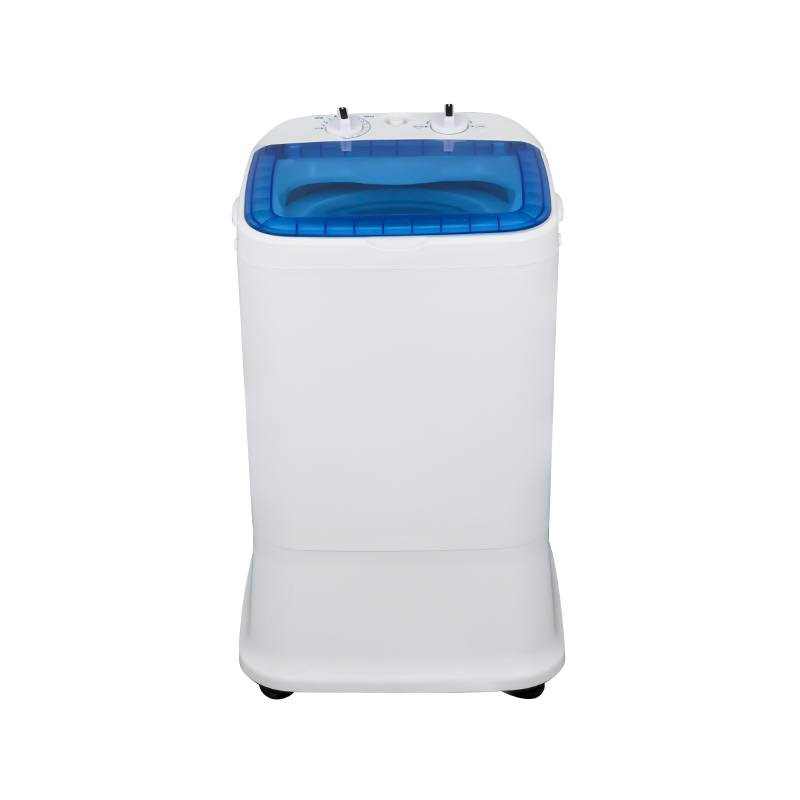
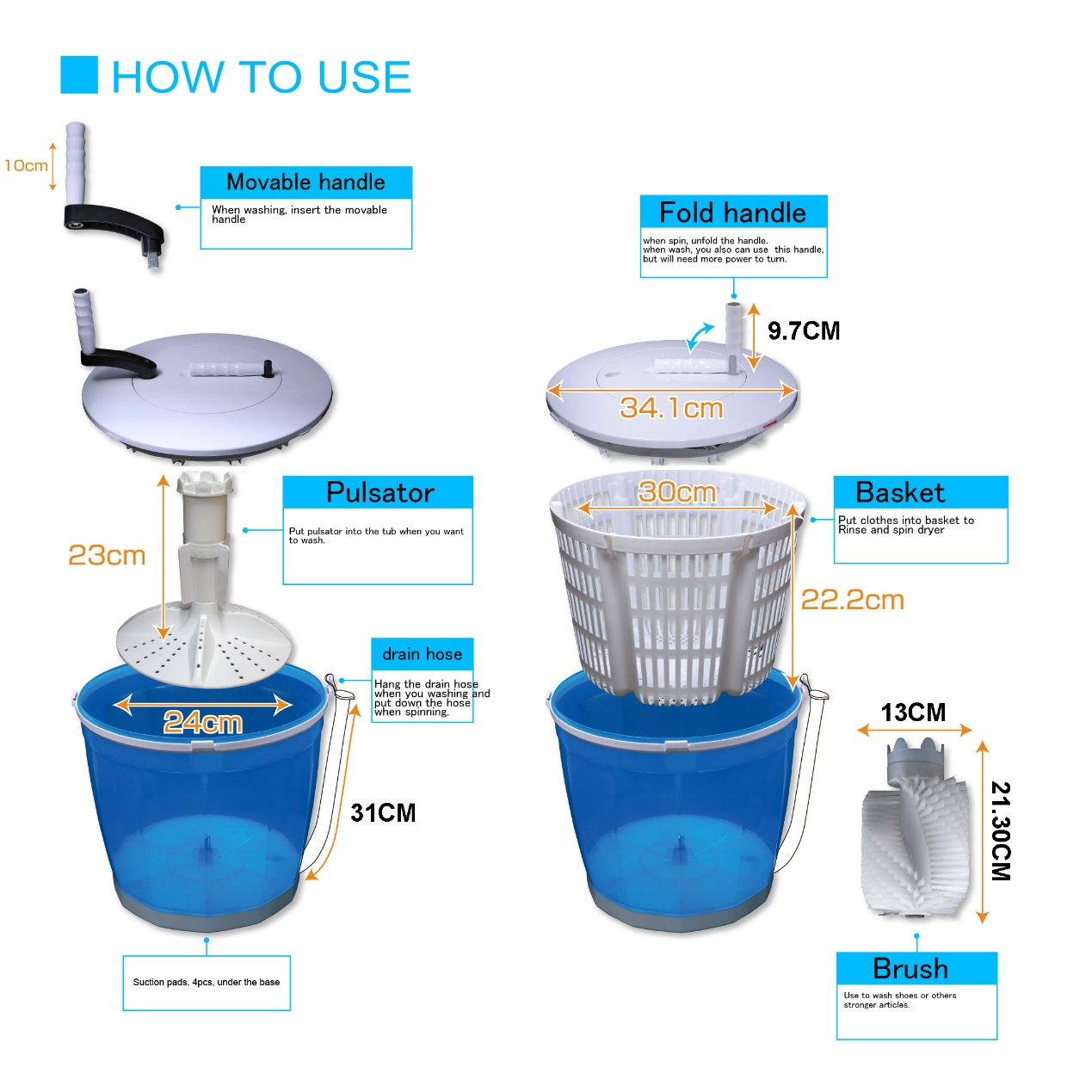
When discussing spin efficiency, many corporate clients or savvy consumers are concerned about energy consumption. How many watts in a washing machine? This is a complex question because the power fluctuates depending on the stage of the cycle.
Understanding wattage helps businesses evaluate the operating costs of large-scale laundry centers. It also helps home users realize that efficient spinning is a way to reduce total household energy consumption by shortening subsequent drying times.
Not all garments can withstand the pressure of high-speed rotation. We must adjust spin parameters based on the tolerance of the fabric to prevent irreversible damage.
| Fabric Type | Recommended Speed (RPM) | Core Benefit |
|---|---|---|
| Heavy Cotton / Towels | 1200 - 1400 | Maximize extraction for ultra-fast drying |
| Daily Mixed Fabrics | 800 - 1000 | Balance dryness with anti-wrinkle effects |
| Synthetics / Activewear | 600 - 800 | Prevent fiber deformation from overheating |
| Silk / Lace / Fine Linen | 400 - 600 | Gentle extraction to prevent fiber breakage |
Many curious users ask: What makes a washing machine spin? In modern washing machines, this is primarily attributed to the electric motor and the transmission system. Traditional machines may use a belt drive, while high-end models feature Direct Drive (DD) motors. When the electronic controller sends a spin command to the motor, it accelerates in stages—first rotating at a low speed to distribute clothes evenly (preventing imbalance) before surging to the set maximum speed.
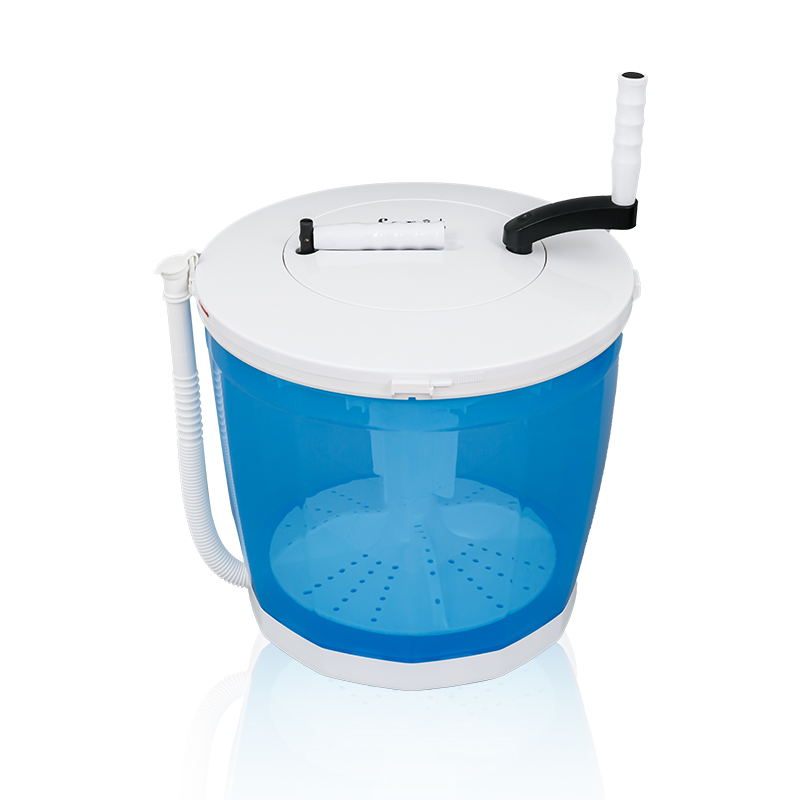
In contrast, manual washing machines usually rely on human power or simple hand-cranked mechanical structures. While they provide basic moisture extraction, they can rarely reach the physical limits of over 1000 RPM, meaning clothes from manual washing machines often feel significantly damper.
While high speed means dryer clothes, excessive speeds can cause “stress damage” to delicate fabrics.
When cotton or linen fabrics are pressed tightly against the drum wall at 1400 RPM, the fibers may form fixed creases. If these creases are “crushed” while damp, it is very difficult to restore smoothness even with subsequent ironing.
For wool or high-grade silk, the tension generated by high-speed spinning can cause tiny fibers to break. This is why some clothes develop pills on the surface or lose their luster after a few washes. Low-speed spinning (400-600 RPM) preserves the natural elastic space within the fibers.
To obtain the best drying results while extending garment life, please follow these professional recommendations:
Mastering the true meaning of what does spin mean on washing machine lies in finding the “Golden Mean” between drying efficiency and fabric protection. Whether you are comparing the how many watts in a washing machine performance metrics of high-end models or returning to basic speed selection, scientific operation ensures your clothes remain as crisp as the day you bought them.
In today’s fast-fashion era, long-term care for high-quality clothing is often overlooked. In fact, beyond basic washing and spinning, the Critical Functions built into modern washing machines are the “hidden heroes” of garment preservation. Many expensive cashmere sweaters, silk blouses, or high-performance fabrics can suffer irreversible damage in just one wash under the wrong settings.
To achieve true “garment asset preservation,” we need to understand the physical and textile logic behind these advanced features.
The Permanent Press cycle is a frequently misunderstood feature. Its core logic lies in preventing “heat-set” wrinkles by precisely controlling temperature fluctuations and physical pressure.
Synthetic fibers (like polyester and nylon) and certain blends are thermoplastic. In warm wash water, these fibers become soft and pliable. If the machine enters a high-speed spin or hits cold water abruptly at the end of the wash, these fibers will cool rapidly while compressed, forming stubborn wrinkles that are difficult to remove even with ironing.
The key to the Permanent Press cycle is its use of warm water during the wash phase, followed by a gradual introduction of cold water before the rinse begins. This gradual cooling allows fibers to stabilize in a flat, relaxed state. Subsequently, the program switches to a slower spin speed. This avoids excessive centrifugal force during the spin phase, preventing the clothes from being crushed against the drum wall.
For extremely fragile materials like wool, lace, and silk, traditional aggressive agitation is almost fatal. The Delicates/Hand Wash program is designed to mimic the gentleness of human hands through mechanical innovation.
Unlike the continuous tumbling or rotation of standard modes, the Delicates program employs a “Wobble” or intermittent action. The motor uses short pulses to move the drum, causing the clothes to sway gently in the water. This movement creates enough hydrodynamic pressure to remove dirt but not enough to stretch or break delicate fibers.
Wool fibers have scales on their surface that “felt” under heavy friction, leading to shrinkage and hardening. By reducing agitation frequency and increasing soaking time, the Delicates cycle drastically lowers the friction coefficient between fibers. This is crucial for protecting the mesh structure of lace and the fluffiness of cashmere.
To help you choose the most suitable mode, the following table summarizes the technical differences between these key functions.
| Program Name | Agitation Action | Temperature Strategy | Expected Result |
|---|---|---|---|
| Normal Wash | Continuous Tumbling | Constant Temp | Heavy-duty cleaning for durable cottons |
| Permanent Press | Medium Agitation | Gradual Cool-down | Smooth fabric, reduces ironing needs |
| Delicates | Intermittent Wobble | Low / Cold Water | Prevents deformation, protects silk/wool |
| Hand Wash | Slight Oscillation | Constant Cold Water | Maximum mimicry of gentle hand rubbing |
How can you get the most out of these features in practice? Here are some advanced tips:
For business shirts made of cotton-synthetic blends, always select Permanent Press. It is recommended to remove the clothes immediately after the cycle ends and hang them on hangers. By utilizing the gravity of the slight moisture retained after the “cool-down rinse,” shirts can straighten naturally, reducing reliance on high-heat ironing and preserving fiber toughness.
When using the Hand Wash mode, always use a dedicated laundry bag. Although the machine’s movement is already gentle, the laundry bag acts as a second physical barrier, preventing buttons, zippers, or other decorations from snagging the delicate weave of the fabric.
Except for specific “Permanent Press” needs, most advanced color-protection and fiber-care functions favor cold water or temperatures below 30°C. High heat accelerates the thermal movement of dye molecules, leading to fading, and can destroy the structure of protein fibers like silk. Combining the machine’s Cold Wash technology allows for effective cleaning by extending wash time to compensate for lower chemical activity, without damaging the fibers.
Modern washing machine functions are the result of integrating physics, chemistry, and textile engineering. Permanent Press prevents wrinkles via temperature control, while Delicates prevents deformation through motion control.
Mastering these core functions not only keeps your clothes looking crisp and vibrant but also promotes a sustainable lifestyle—preserving the things you love through expert care.
In today’s fast-paced corporate and domestic environments, the efficient use of household appliance resources has become a specialized field of study. While many view washing machine programs as redundant, each preset parameter is actually a strategic balance point between “Cleaning Efficiency” and “Fabric Care.”
Treating all garments with a “Normal Cycle” leads to immense energy waste and accelerates the deterioration of expensive fabrics.
The Rinse & Spin cycle is a significantly undervalued “energy pioneer.” It involves no heating phase and skips the lengthy, aggressive washing sessions.
A full laundry cycle involves pre-wash, main wash, multiple rinses, and spinning. For garments that only carry sweat or dust (like gym gear), heavy chemical cleaning is overkill. Rinse & Spin bypasses the main wash, utilizing fresh water for a quick physical flush. Data shows this mode can save 50% or more water compared to a full cycle while drastically reducing power consumption.
In contrast, the Heavy Duty program is a showcase of maximum machine performance, designed to tackle the toughest stains through mechanical force.
Under this mode, the machine employs longer tumbling strokes and higher agitation frequencies. This high-intensity mechanical impact forces the detergent solution deep into the textures of heavy fabrics like denim. Often paired with higher temperatures, it excels at breaking down oils and protein-based stains.
The following table summarizes the technical logic for intuitive selection.
| Cycle Type | Target Material | Core Benefit | Resource Efficiency |
|---|---|---|---|
| Rinse & Spin | Gym Gear / Dusty Items | Rapid refresh; saves 50% water | Very High (Eco-Choice) |
| Heavy Duty | Denim / Canvas / Workwear | Maximum force for deep grime | Medium (Cleaning Focus) |
| Quick Wash | Lightly soiled daily wear | Reduces wear; extends garment life | High (Time Saving) |
Many use Quick Wash solely to save time, but textile experts view it as a secret weapon for extending garment longevity.
Every minute of rotation and agitation exerts a small amount of pull and friction on fibers. Years of long cycles are the primary cause of pilling, fading, and thinning. Quick Wash compresses the wash time to 15-20 minutes, significantly reducing physical friction between fibers.
Modern clothes are rarely “dirty” in the traditional sense; they usually just have trace amounts of sweat after one wear. In these cases, long cycles are not only unnecessary but destructive. By minimizing soaking and tumbling time, Quick Wash locks in original colors and maintains fiber elasticity.
Understanding the “strategic intent” of your washing machine programs saves on utility bills and preserves the texture of your clothes for years to come. Whether it’s the efficiency of Rinse & Spin, the power of Heavy Duty, or the gentleness of Quick Wash, the right choice is the most direct upgrade to your quality of life.
When discussing how to extend the life of clothes, most people focus on choosing detergents or switching wash programs, yet overlook a crucial prerequisite: the cleanliness of the washing machine itself. If the interior of your machine has become a breeding ground for dirt and bacteria, then no matter how expensive the care mode you choose, the final results will carry invisible pollutants. To extend the life of your clothes, you must first maintain the machine.
The interior of a washing machine—specifically the gap between the inner drum and the outer tub—is a dark, damp, and enclosed space. This provides a perfect loop for microbial growth.
In daily washing, not all detergent is completely rinsed away. Excess liquid detergent and fabric softeners, combined with calcium and magnesium ions from tap water, form a viscous, glue-like substance. This residue adheres to the back of the drum, inside the door seal folds, and within the drainage pipes.
Over time, these residues evolve into what is known as Biofilm. A biofilm is more than just dirt; it is a microscopic ecosystem that protects bacteria and mold from being flushed away by subsequent wash water.
Every 30 washes, run a “Tub Clean” cycle. This is a golden rule written into manuals by many manufacturers. The Tub Clean program differs from regular cycles as it is specifically designed to target these stubborn residues.
Standard cycles use lower water levels to save energy. However, the Tub Clean program uses the maximum water level to ensure the flow covers every corner of the inner drum and reaches the top areas of the outer tub usually left untouched.
Most modern Tub Clean programs raise the water temperature to 60°C - 90°C. High heat effectively dissolves grease residues and kills most bacteria. When used with a specialized washing machine cleaner (usually sodium percarbonate), the active oxygen strips and decomposes the attached biofilm.
To keep your machine in peak condition, refer to the table below to establish a regular maintenance plan.
| Frequency | Core Task | Expected Benefit |
|---|---|---|
| After Every Wash | Wipe the door seal and leave the door ajar for ventilation | Prevents mold and black spots on the seal |
| Every 30 Washes (Monthly) | Run a full “Tub Clean” cycle | Removes biofilm and eliminates odor sources |
| Every 3 Months | Clean the drain pump filter and detergent drawer | Prevents clogs and secondary pollution |
| Annually | Check inlet valve filters and rear hoses | Ensures stable water pressure and prevents leaks |
To make this function most effective, simply pressing a button isn’t enough. You need a standard operating procedure.
Before starting, ensure the drum is empty. Check the door seal (gasket) crevices and manually remove lint, coins, or hair.
Do not use regular laundry powder. Add specialized washing machine cleaner powder or tablets into the main wash compartment. These contain high concentrations of active oxygen and chelating agents to dissolve mineral deposits.
Press the “Tub Clean” button. If your machine lacks this, set it manually: Highest water level + Highest temperature + Longest wash duration. During the cycle, observe the water; if you see cloudy water or debris, the cleaning is working.
Maintaining the machine is about more than just preventing breakdowns; it’s about every garment you put inside.
Just as a professional chef sharpens their knives, a true garment care expert must prioritize the cleanliness of the machine. The Tub Clean cycle is not an optional extra; it is the foundation of a garment longevity strategy. By deep-cleaning every 30 washes, you ensure your clothes are treated in the cleanest environment possible.
A1: No. The Rinse & Spin cycle is specifically designed to physically flush out residues using fresh water. It is intended for hand-washed items that need rinsing or for gym gear and dusty clothes that only require a quick refresh. Adding detergent creates excess foam that cannot be fully rinsed away without a proper wash cycle, which may lead to skin irritation.
A2: This is usually caused by an Unbalanced Load. When the drum contains a single heavy item (like a thick blanket) or clothes clumped into a ball, centrifugal force causes the inner drum to strike the outer tub. Modern machines detect this imbalance and automatically reduce speed or stop to protect the bearings. We recommend pausing the program, manually redistributing the clothes evenly, and restarting.
A3: The core difference lies in temperature strategy and mechanical force. Permanent Press focuses on wrinkle prevention by using warm wash water followed by a “cool-down rinse” to flatten fibers. Delicates focuses on structural protection, using an intermittent “Wobble” motion and cold water throughout to prevent wool from shrinking or lace from tearing.
A4: It is not recommended as a full replacement. While white vinegar has some descaling properties, its acidity can corrode the rubber door seals (gaskets) over time. Specialized cleaners (usually containing Sodium Percarbonate) produce high amounts of active oxygen, which is far more effective at stripping away stubborn Biofilm. We recommend using a professional cleaner every 30 washes.
A5: Yes, for specific fabrics. While high RPM significantly reduces drying time, it subjects silk, linen, and fine cotton fibers to “stress fractures.” For high-end or delicate garments, we recommend limiting the spin speed to 600–800 RPM to balance moisture extraction with fiber protection.
To demonstrate the professionalism of your content, you may reference or list the following academic and industrial standards at the bottom of your page:
 No.62, Beiyihuan Road, Industry Area Zhangqi Town Cixi Ningbo China.
 13777243189
 +86-13777243189
 +86-0574-63809239
Copyright © Ningbo Changle Electric Appliance Co., Ltd. All Rights Reserved.